7 Best Access Control Readers for Global Buyers
Choosing the right Access Control Readers can shape security, user experience, and operating costs for years. Global buyers face different climates, building layouts, network conditions, and workplace routines. A reader that performs well in a dry office may struggle near a humid factory entrance.
This guide examines seven strong options for international projects. It considers RFID, mobile credentials, biometric features, keypad entry, installation flexibility, and system compatibility. Practical details matter, including response time, outdoor durability, cable requirements, and maintenance access. A clear LED indicator can help visitors enter confidently during a rainy evening. Reliable support also matters when a replacement unit must cross borders.
No shortlist is flawless. A premium model may offer better encryption but require more training or costly software. A compact reader may simplify installation yet provide fewer authentication choices. Buyers should verify local compliance, data-handling expectations, warranty terms, and compatibility with existing controllers before purchasing. Product specifications can look impressive on paper. Field conditions often tell a different story.
The selections reflect a balanced review of security functions, usability, deployment experience, and long-term value. They are not ranked as universal winners. Each model suits different priorities, from small offices and apartment buildings to logistics sites and multi-location enterprises. Careful testing remains essential, especially with mobile credentials, network interruptions, and users wearing gloves. A thoughtful decision protects more than a doorway. It supports smoother daily operations.
What Access Control Readers Are and How They Work
An access control reader is the device that checks a person’s identity before allowing entry. It reads credentials such as cards, mobile signals, PINs, or fingerprints. The reader sends that information to a controller, which compares it with approved records. If the match is valid, the controller releases the door lock.
The process usually takes less than a second. A card reader uses radio frequency communication, while a biometric reader analyzes a physical feature. Some systems connect through wired networks, and others use wireless links. Security depends on more than the reader itself. Encryption, credential management, audit logs, and reliable power also matter. MarketsandMarkets’ 2024 Access Control Market report projects growth from about USD 10.5 billion in 2024 to USD 15.2 billion by 2029. This expansion reflects demand for connected and centrally managed entry systems. However, market growth does not guarantee better protection. Poor installation can still create weak points.
Tips: Match the reader to the environment. Outdoor entrances need weather resistance, clear lighting, and stable network coverage. Test credentials during peak traffic, not only in a quiet showroom. Keep backup entry procedures documented. No reader is perfect. Biometric accuracy can change with dirt, gloves, aging, or user movement. A practical evaluation should measure speed, failure rates, accessibility, and maintenance effort, not just advertised features. Industry guidance from the Security Industry Association also supports layered security, where readers work with monitoring, permissions, and documented response procedures.
7 Best Access Control Readers for Global Buyers
What Access Control Readers Are and How They Work
Access control readers identify a credential, send the credential data to an access controller, and unlock a door only when the authorization result is valid. The chart shows typical practical reading distances for common reader technologies. Actual performance depends on credential type, antenna design, installation, interference, and local regulations.
Seven Leading Access Control Readers by Technology and Use Case
7 Best Access Control Readers for Global Buyers
Seven Leading Access Control Readers by Technology and Use Case
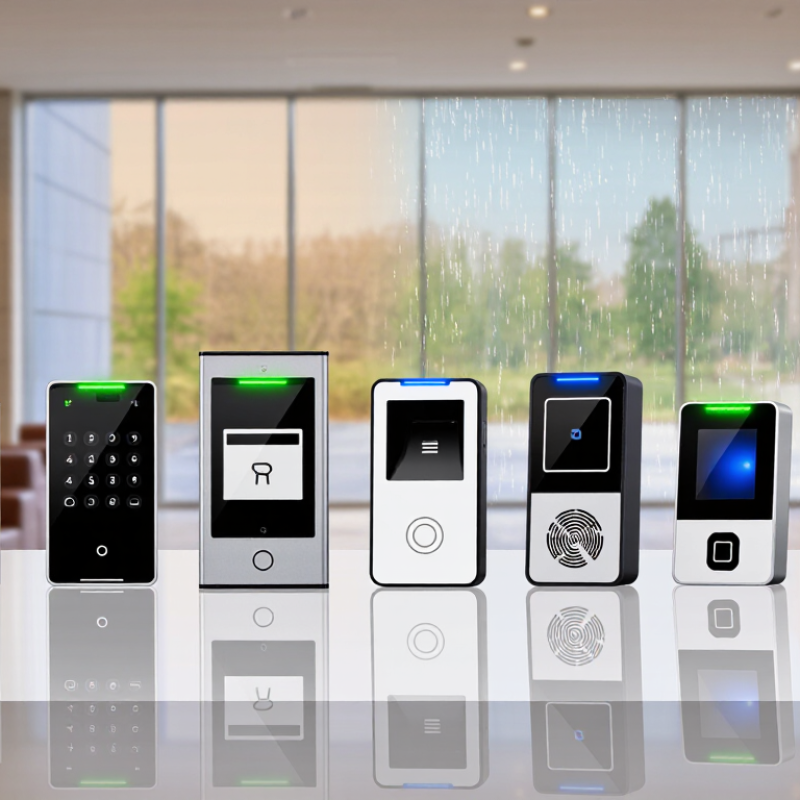
The best access control reader depends on the door, users, and operating environment. RFID readers suit offices, schools, and warehouses with frequent daily entry. They work quickly and support cards, fobs, or mobile credentials. Choose encrypted communication and weather protection for outdoor installations.
Fingerprint readers fit controlled workplaces where users need convenient, card-free access. Facial readers can help at busy entrances, but lighting, privacy expectations, and accessibility require careful evaluation. PIN readers remain practical for small facilities, service rooms, and backup entry. They are simple, but shared codes can weaken accountability. Better systems use individual codes and automatic lockout settings.
Mobile credential readers support NFC or Bluetooth devices, making them useful for flexible workplaces and temporary permissions. QR and barcode readers serve visitors, deliveries, and event access. A multi-technology reader combines several methods, helping organizations upgrade gradually. It can also increase configuration complexity. Keep that in mind.
In real installations, I check reader placement, network stability, emergency procedures, and maintenance access before choosing a model. A high rating does not guarantee reliable performance in every climate. Test wet gloves, strong sunlight, network loss, and crowded entry conditions. I once underestimated user training; even an excellent reader can frustrate people when instructions are unclear. Global buyers should also verify local privacy requirements, electrical standards, language support, and replacement availability.
How to Select the Best Reader for Different Facility Requirements
Selecting the best access control reader starts with the facility, not the product list. Start with the door.
A small office may need a keypad reader for simple, low-cost entry. RFID readers suit buildings where staff carry cards daily. Mobile credential readers reduce card replacement, but they depend on reliable phones and clear enrollment procedures. Biometric readers can support high-security areas, yet privacy, accessibility, and local data rules require careful review. QR readers work well for temporary visitors when codes can be issued and cancelled quickly. Long-range readers may help vehicle gates, while dual-technology readers add flexibility during credential changes.
Walk through the site before comparing specifications. Check rain, dust, glare, temperature, wall space, and network coverage. A reader near a metal frame may perform differently from one mounted indoors. Test how quickly it responds when users wear gloves or carry equipment. Test it. Ask whether the controller supports audit logs, emergency procedures, role-based permissions, and integration with existing doors. These details often matter more than a glossy feature sheet.
Global buyers should verify regional frequency requirements, encryption practices, accessibility expectations, and privacy obligations with qualified local professionals. Avoid storing more personal data than the facility genuinely needs. A technically advanced reader can still fail if visitors cannot use it easily. I have found that installation quality and staff training often decide reliability. The first choice may also be wrong after a busy morning test, which is why a limited pilot remains worthwhile.