China Top Water Quality Monitor Suppliers for Global Buyers?

For global buyers, selecting a dependable Water Quality Monitor supplier in China requires more than comparing online prices. The right partner should combine manufacturing experience, technical knowledge, responsive communication, and documented quality controls. This guide introduces leading Chinese suppliers serving laboratories, factories, aquaculture farms, municipalities, and environmental projects worldwide.

A reliable supplier should explain measurement ranges, sensor materials, calibration procedures, data storage, and communication options in clear language. Buyers may need monitors for pH, dissolved oxygen, conductivity, turbidity, temperature, ammonia, or multiple parameters. Each application creates different demands. Details matter.

Look for suppliers with practical project experience, traceable testing records, and stable after-sales support. Factory audits, sample testing, and video inspections can reveal more than polished product photos. Ask whether replacement probes are available and whether firmware updates remain accessible after purchase. These small questions often expose large differences.

Certification can support trust, but it should never replace technical verification. A certificate alone does not prove long-term field performance. Request calibration reports, user references, installation guidance, and clear warranty terms. Verify whether the listed specifications match actual operating conditions, especially in salty water, wastewater, or outdoor environments.

No supplier is perfect. Some companies communicate quickly but provide limited documentation, while others offer strong engineering but slower replies. That trade-off deserves attention. Global buyers should evaluate total ownership cost, not only the first invoice. A dependable Water Quality Monitor supplier should help reduce measurement errors, maintenance delays, and unexpected replacement costs. The following sections compare China’s top suppliers through these practical and trustworthy criteria.

China Top Water Quality Monitor Suppliers for Global Buyers?

What Are Water Quality Monitors and Why Do Global Buyers Need Them?

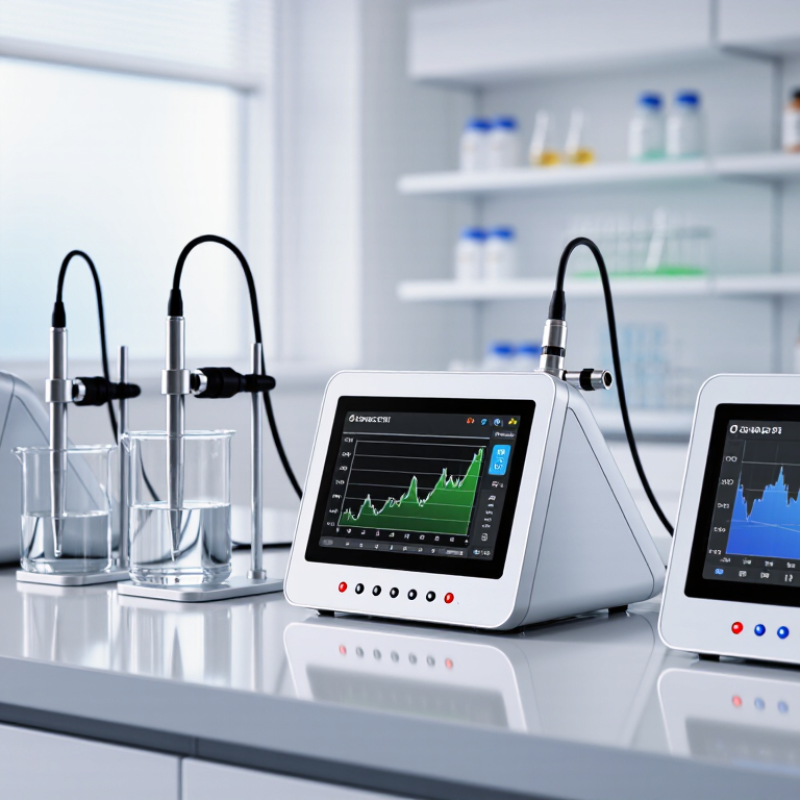
Water quality monitors are instruments that measure conditions in water continuously or at scheduled intervals. Common parameters include pH, turbidity, conductivity, temperature, dissolved oxygen, and residual chlorine. Each value reveals a different risk. For example, rising turbidity may indicate soil runoff, damaged filtration, or microbial growth. A falling dissolved oxygen level can threaten fish and signal excessive organic pollution.

Global buyers need these monitors because water conditions can change between laboratory tests. A compact sensor beside a treatment tank can record data every minute. Operators can then detect abnormal readings before water reaches homes, farms, or production lines.

In my experience, useful equipment must offer stable probes, clear calibration procedures, data storage, and alarms that staff can understand quickly. Remote access also helps teams inspect sites across different time zones.

Chinese suppliers serve many international projects with customized sensor packages, cabinets, communication interfaces, and installation support. Buyers should check measurement ranges, response time, maintenance costs, enclosure protection, and compatibility with local systems.

Certification documents matter, but practical test records matter too. No monitor is perfect. Sensors drift, fouling affects readings, and poor calibration can create false confidence. A supplier that explains these weaknesses may be more reliable than one promising flawless performance.

A small pilot test is wise, especially when water temperature, salinity, or suspended solids differ from factory conditions.

How to Evaluate China’s Water Quality Monitor Suppliers

China’s water quality monitor suppliers require more than a low quotation. The WHO and UNICEF Joint Monitoring Programme reported that 2.2 billion people lacked safely managed drinking water in 2022. This increases demand for dependable field instruments. Buyers should examine measurement ranges, sensor stability, response time, and documented detection limits. Check whether the supplier follows ISO 17025 calibration practices or provides traceable calibration records. Ask for test data using real water samples, not only laboratory demonstrations.

A reliable supplier should explain its quality system clearly. Review factory inspection records, production controls, software revision procedures, and failure rates. ISO 9001 certification is useful, but it does not prove measurement accuracy. Request independent verification against relevant national or international methods.

For drinking-water projects, compare readings for turbidity, pH, conductivity, dissolved oxygen, and residual chlorine. The WHO Guidelines for Drinking-water Quality remain a practical reference for selecting test parameters. A polished factory tour can still hide weak after-sales support. That risk deserves attention.

Tips: Request three recent calibration certificates and one anonymized customer reference. Confirm sensor replacement costs, warranty exclusions, training, and response times in writing. Test two sample units for 30 days before placing a large order. Keep raw readings, temperature notes, and maintenance records. A cheaper monitor may become expensive after repeated sensor drift. I have also found that translated manuals can be incomplete, so ask for technical English documentation and remote training. Supplier evaluation is never perfectly objective; field conditions can expose weaknesses that factory tests miss.

Leading Chinese Supplier Categories and Product Specializations

China Top Water Quality Monitor Suppliers for Global Buyers

Chinese water quality monitor suppliers generally serve several distinct categories. Sensor manufacturers focus on pH, conductivity, dissolved oxygen, turbidity, and residual chlorine probes. Portable instrument suppliers provide handheld meters for field inspections, aquaculture sites, and industrial maintenance. Laboratory equipment suppliers usually offer benchtop analyzers with controlled sampling and higher measurement stability.

System integrators build online monitoring stations for rivers, wastewater plants, and process pipelines. Their packages may include controllers, automatic cleaners, data loggers, and wireless communication modules. OEM and ODM suppliers customize housings, displays, connectors, and software interfaces for international buyers. Multiparameter platforms are also common. They reduce installation space, but one probe failure can affect several readings.

Experienced buyers should examine calibration procedures, replacement sensor costs, enclosure ratings, and local support. Ask for test records using traceable reference solutions. Confirm operating temperature, measuring range, response time, and communication protocols before ordering. Suppliers with documented quality systems often provide clearer inspection records and production consistency. Still, certificates alone cannot prove field reliability. A monitor may perform well in clean water but drift in muddy wastewater. Request sample testing when possible. I have found that installation details matter more than brochures suggest. Poor grounding, air bubbles, or delayed cleaning can distort results. Some suppliers explain these risks carefully; others need repeated questions. That difference is worth recording during supplier evaluation.

China Top Water Quality Monitor Suppliers for Global Buyers? - Leading Chinese Supplier Categories and Product Specializations
Supplier Category Primary Parameters Typical Product Formats Common Measurement Ranges Typical Applications Relevant Standards or Methods Key Buyer Considerations
Portable Multi-Parameter Monitor Suppliers pH ORP Conductivity Dissolved Oxygen Temperature Handheld meters, interchangeable probes, waterproof field kits, rechargeable data-loggers pH 0–14; conductivity from low µS/cm to approximately 200 mS/cm; dissolved oxygen commonly 0–20 mg/L; temperature generally −5–60°C Rivers, lakes, aquaculture ponds, wastewater inspections, environmental field surveys and emergency testing Electrochemical measurement principles; calibration and sampling practices commonly referenced in Standard Methods and ISO water-testing procedures Probe durability, automatic temperature compensation, GPS or data export, battery life, calibration workflow and replacement sensor availability
Online Industrial Water Quality Monitor Suppliers pH/ORP Conductivity Temperature Pressure Wall-mounted analyzers, panel systems, skid-mounted monitoring units and process transmitters pH 0–14; conductivity commonly from 0.01 µS/cm to 2,000 mS/cm depending on sensor type; temperature often 0–100°C Cooling towers, boiler water, chemical processing, metal finishing, utilities, drinking-water plants and wastewater treatment Industrial control practices using 4–20 mA, RS-485 or digital communication; installation may follow plant electrical and enclosure requirements Continuous operation, relay outputs, alarm functions, automatic cleaning, enclosure rating, process connection and integration with PLC or SCADA systems
Turbidity and Suspended-Solids Monitor Suppliers Turbidity Suspended Solids Temperature Portable turbidity meters, submersible probes, inline optical sensors and continuous monitoring stations Low-range instruments may measure below 1 NTU; broader process models can cover hundreds or thousands of NTU, depending on optical design Drinking-water clarification, filtration monitoring, surface-water studies, construction-site runoff and wastewater process control ISO 7027 and EPA Method 180.1 are commonly referenced turbidity methods; results can differ because of optical wavelength and calibration technique Measurement range, wiper or anti-fouling design, bubble compensation, calibration standards, optical path maintenance and correlation with site-specific suspended solids
Residual Chlorine and Disinfection Monitor Suppliers Free Chlorine Total Chlorine pH Temperature Colorimetric analyzers, amperometric analyzers, reagent-based online systems and portable test meters Many drinking-water instruments cover approximately 0–5 mg/L as chlorine; higher-range models are available for industrial and pool applications Municipal drinking water, swimming pools, food and beverage processing, cooling-water disinfection and distribution networks DPD colorimetric methods, Standard Methods 4500-Cl, EPA-approved procedures and amperometric measurement approaches may be used depending on the instrument Free versus total chlorine measurement, reagent consumption, pH compensation, sample conditioning, response time and compliance with local disinfectant limits
Dissolved Oxygen Monitor Suppliers Dissolved Oxygen Temperature Air Saturation Optical DO meters, polarographic probes, galvanic probes and fixed aeration-control analyzers Common field ranges are 0–20 mg/L or 0–200% air saturation; specialized systems may support higher oxygen concentrations Aquaculture, activated-sludge treatment, aerobic digestion, natural-water research and fermentation-related process monitoring Optical luminescence and membrane-electrode techniques; calibration is commonly performed against air-saturated water or air according to the sensor design Optical versus membrane technology, maintenance frequency, salinity and pressure compensation, sensor lifetime, response time and aeration-control compatibility
Ammonia, Nitrogen and Nutrient Analyzer Suppliers Ammonia-N Nitrate-N Nitrite-N Phosphate Colorimetric analyzers, ion-selective electrode systems, reagent-based online analyzers and laboratory photometers Ranges vary widely by chemistry and matrix; low-level drinking-water models and high-range wastewater models are both available Biological nutrient removal, aquaculture, drinking-water assessment, agricultural runoff studies and environmental compliance testing Colorimetric methods and ion-selective electrode methods are commonly used; laboratories may reference Standard Methods or national regulatory procedures Detection limit, reagent shelf life, sample filtration, interference from color or suspended solids, automatic cleaning and cost per test
COD, TOC and Organic-Pollutant Monitor Suppliers COD TOC UV254 DOC Online UV analyzers, digestion-based COD systems, combustion TOC analyzers and laboratory benchtop instruments COD and TOC ranges depend strongly on sample matrix; instruments may be configured for low-level drinking water or high-load industrial wastewater Industrial wastewater, municipal treatment, water reuse, pharmaceutical production, petrochemical processes and source-water monitoring TOC methods commonly use combustion or wet oxidation; UV254 provides an optical surrogate and should be correlated with laboratory results for each water type Reagent and consumable requirements, sample conditioning, fouling resistance, correlation with laboratory COD or TOC, maintenance interval and data traceability
Laboratory Benchtop Water Analyzer Suppliers pH ISE Photometry Conductivity Benchtop meters, visible or UV-visible photometers, multiparameter laboratory systems and automatic titration platforms Designed for controlled laboratory ranges, with selectable methods and cuvettes or electrodes suited to specific analytes Drinking-water laboratories, academic research, quality-control departments, food processing and environmental analysis Standard Methods, ISO procedures and national laboratory methods may be programmed or followed depending on the parameter and instrument configuration Photometric wavelength accuracy, method library, calibration records, sample throughput, USB or network export and compatibility with laboratory information systems
IoT and Remote Water Monitoring Suppliers pH Turbidity DO Conductivity Temperature Solar-powered stations, cellular or LoRaWAN nodes, cloud dashboards, remote telemetry units and compact sensor buoys Parameter range depends on the connected probe; systems are generally configured for periodic sampling and transmission rather than laboratory analysis Remote rivers, reservoirs, aquaculture sites, irrigation channels, flood-prone areas and distributed wastewater assets Communication protocols may include cellular networks, LoRaWAN, MQTT, Modbus or HTTP APIs; local data-security and telecom requirements should be checked Network coverage, power autonomy, data ownership, offline storage, alarm reliability, cybersecurity, sensor replacement and cloud-platform subscription terms
Drinking-Water Compliance and Disinfection Monitoring Suppliers Turbidity Residual Chlorine pH Conductivity Plant analyzers, distribution-line monitors, sampling-station panels and portable verification instruments Typically optimized for low turbidity and disinfectant concentrations encountered in treated drinking water; exact ranges vary by configuration Water-treatment plants, clear-water reservoirs, pumping stations, distribution networks and public-utility laboratories ISO 7027, EPA 180.1, DPD chlorine procedures and national drinking-water regulations are commonly considered during system selection Regulatory acceptance, automatic verification, audit trails, alarm management, sample-line design, calibration documentation and local service support
Aquaculture and Environmental Monitoring Suppliers DO pH Temperature Salinity Ammonia Floating sensor platforms, handheld meters, pond probes, automatic feeders with monitoring functions and remote alert systems Usually configured around freshwater or marine operating conditions, with salinity and temperature compensation for biological applications Fish farms, shrimp ponds, hatcheries, cages, wetlands, lakes and ecological research sites Field calibration and accepted electrochemical, optical or colorimetric methods; operating procedures should account for salinity, fouling and biological growth Probe fouling resistance, continuous alerts, waterproof construction, sensor placement, oxygen accuracy at changing temperature and ease of field servicing

Key Technologies and Standards Used in Water Quality Monitoring

For global buyers assessing China’s water quality monitor suppliers, technology matters more than catalog size. The WHO/UNICEF Joint Monitoring Programme reported that 2.2 billion people lacked safely managed drinking water in 2022. This pressure increases demand for reliable online monitoring in treatment plants, rivers, and industrial discharge points.

Modern systems usually combine optical dissolved oxygen sensors, electrochemical pH probes, turbidity meters, conductivity cells, and ion-selective electrodes. ISO 7027 guides turbidity measurement, while ISO 5667 covers water sampling practice. These standards help buyers compare results across countries. However, sensor accuracy depends on cleaning, temperature compensation, and calibration frequency. A perfect reading is uncommon.

Look for automatic compensation and audit-ready records.

The United States Environmental Protection Agency emphasizes approved analytical methods for regulated water testing. Online instruments should therefore support traceable calibration, method verification, and secure data export. The 2024 UN World Water Development Report also highlights rising water stress and stronger monitoring needs across agriculture, cities, and industry. Suppliers with local field engineers can reduce downtime, especially when biofouling clouds an optical window or sediment blocks a sampling line. Remote alerts are useful, but they can create false alarms. Buyers should request recovery data, maintenance logs, detection limits, and performance results from comparable sites. Product brochures alone are not enough.

How Global Buyers Can Compare, Verify, and Purchase from Suppliers

China Top Water Quality Monitor Suppliers for Global Buyers?

Global buyers should compare Chinese water quality monitor suppliers through evidence, not attractive catalog images. The WHO/UNICEF Joint Monitoring Programme reported that 2.2 billion people lacked safely managed drinking water in 2022. This highlights the need for dependable field data. Ask each supplier for detection limits, calibration intervals, response time, and operating temperature. Compare identical specifications. Otherwise, price comparisons become misleading.

Verification should begin with legal registration and a traceable production address. Request recent calibration records and test reports from competent laboratories. ISO/IEC 17025 laboratory evidence is more useful than a generic certificate. Check whether the sensor measures pH, turbidity, conductivity, dissolved oxygen, or other required parameters. Inspect probe materials, enclosure protection, data storage, and communication protocols. A factory video helps, but an independent inspection is stronger. I would not trust a polished spreadsheet alone.

Purchase decisions should include landed cost, spare probes, software access, training, warranty terms, and replacement time. The UNESCO World Water Development Report 2024 links stronger water data with better resource management, yet many buyers still focus only on unit price. That is a costly blind spot. Request a sample unit for seven to fourteen days, using local water conditions. Record drift, cleaning needs, and readings beside a laboratory reference. Some specifications may look perfect. Real operation can disagree.

China Top Water Quality Monitor Suppliers for Global Buyers

How global buyers can compare, verify, and purchase from suppliers by checking whether a monitor can reliably measure key drinking-water parameters against internationally recognized reference values.

Reference basis: The values shown are WHO guideline values for selected drinking-water parameters. Buyers should compare a monitor’s measurement range, detection limit, accuracy, calibration records, and test reports against the required application and local regulations. The values are reference thresholds, not supplier performance ratings.

Cart Summary

Subtotal: $0