How to Choose a Custom Soap Dish Holder in China?
Choosing a custom soap dish holder in China involves more than selecting an attractive shape. The holder must manage water, support daily use, and match your brand’s quality standards. A polished sample may look impressive, yet poor drainage can leave soap soft and wasteful. Small details matter.
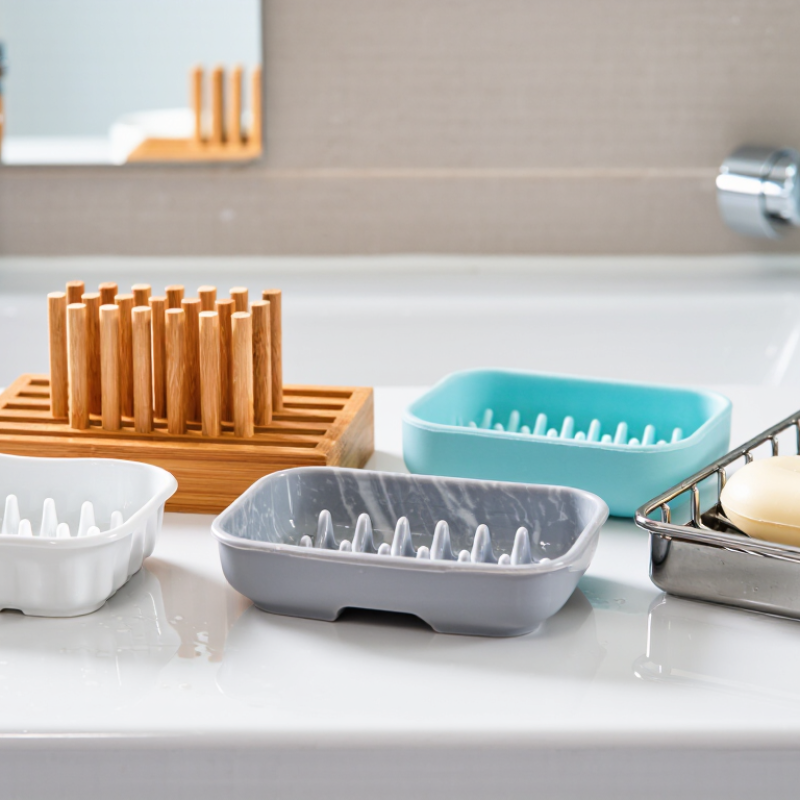
This guide explains how to evaluate a Soap Dish Holder Custom China supplier with practical care. We consider materials, mold design, surface finish, drainage structure, packaging, and production consistency. Ceramic, bamboo, silicone, resin, and stainless steel each offer different benefits. For example, a raised ceramic rack may suit a hotel bathroom, while flexible silicone may work better in a family shower.
Real experience shows that specifications should be written clearly before requesting quotations. Confirm dimensions, color references, logo methods, moisture resistance, and acceptable defect limits. Ask for a physical sample. Check its edges, weight, drainage holes, and stability on a wet counter. Factory photos help, but they do not replace inspection. That is easy to forget.
Reliable suppliers should explain their process, provide relevant testing information, and communicate realistic production timelines. Buyers should also review their manufacturing experience, quality-control records, packaging methods, and response speed. Certifications can support trust, but they should be verified against the actual product and factory. Not every attractive offer is a good value.
The right custom holder balances appearance, function, cost, and dependable delivery. This article offers a practical framework for comparing Chinese manufacturers and avoiding decisions based only on low prices. Some choices may still require compromise. Careful questions make those compromises visible before production begins.
Define Your Custom Soap Dish Holder Requirements
How to Choose a Custom Soap Dish Holder in China?
Define your requirements before contacting a Chinese manufacturer. Measure the soap bar, bathroom shelf, and available wall space. Record the length, width, height, and acceptable tolerance. A few millimeters can affect drainage and stability. Measure twice. Water needs somewhere to go.
Choose the material according to use, appearance, and maintenance needs. Ceramic feels substantial, while stainless steel suits humid bathrooms. Bamboo may look warm, but it needs careful moisture protection. Specify the finish, color, edge shape, and logo method clearly. Ask for drawings showing drain holes, wall thickness, and contact points. Small details matter. A dish can look attractive yet leave soap sitting in water.
Define packaging requirements early. Individual boxes, protective inserts, and carton limits influence the final cost. Request a physical sample before approving mass production. Check its weight, surface quality, drainage speed, and resistance to movement. A sample may pass inspection, but repeated wet use can reveal weaknesses. This is where planning often falls short. Allow time for one design revision.
Provide measurable quality standards, not vague phrases such as “premium” or “good finish.” Confirm inspection steps, production timing, and acceptable defects in writing. Ask how the factory manages color consistency between batches. Clear specifications reduce misunderstandings, though they cannot remove every risk. Your requirement sheet should be practical, detailed, and easy for both sides to verify.
Compare Materials, Designs, and Customization Options
How to Choose a Custom Soap Dish Holder in China?
Material choice affects durability, appearance, and production cost. Ceramic offers a smooth, premium surface and suits bathroom collections with custom colors. Stainless steel resists rust when properly finished, but sharp edges require careful inspection. Bamboo feels warm and natural, although it needs moisture-resistant treatment. Recycled plastic allows flexible shapes and lower costs, yet surface marks may appear. I once underestimated drainage during sampling. The dish looked attractive but held water overnight.
Design should match both the soap size and cleaning habits. Raised feet improve airflow beneath the bar. Slotted surfaces drain water faster. Rounded corners simplify washing. For custom projects, discuss dimensions, color matching, logo methods, packaging, and mold fees with the supplier. Request a physical sample before mass production. Check its weight, stability, drainage, and finish under real bathroom conditions. Small changes may affect the mold and final price.
Tips: Ask for material specifications and moisture-resistance details. Confirm production tolerances in writing. Compare at least three samples, not only photographs. A factory audit or independent inspection can reduce quality risks. Do not choose the lowest quote automatically. Cheap tooling may create uneven edges, weak drainage, or inconsistent colors. Customization is valuable, but excessive decoration can make the holder harder to clean. Keep the design practical. Reconsider anything that looks impressive but collects soap residue.
Evaluate Chinese Manufacturers and Production Capabilities
When choosing a custom soap dish holder in China, evaluate the factory, not only the product photos. UNIDO’s International Yearbook of Industrial Statistics reports that China produced about 31% of global manufacturing value added in 2022. This scale offers strong access to ceramics, stainless steel, bamboo, and injection-molded plastics. However, capacity differs sharply between suppliers. Ask for monthly output, equipment lists, quality records, and recent export experience.
Request a physical sample with drainage holes, smooth edges, stable feet, and a finish that survives repeated washing. Test it beside a wet sink. A practical audit should review mold accuracy, glaze consistency, packaging strength, and batch inspection methods. The ISO Survey 2023 recorded more than 1.26 million ISO 9001 certificates worldwide, but certification alone does not prove careful production. Check the certificate scope and verify whether it covers the actual factory.
Use a small pilot order before approving mass production. Measure dimensions, weight, color variation, and water drainage across several units. China Customs trade data under HS 3924 can help compare export activity for household plastic and ceramic articles, although this code is broad. A supplier may claim advanced capability while outsourcing key processes. That matters. Confirm ownership of molds, material specifications, testing reports, and corrective-action procedures in writing. Some factories communicate quickly but document poorly. That is a warning worth taking seriously.
How to Choose a Custom Soap Dish Holder in China?
Evaluation priorities for Chinese manufacturers and production capabilities
This procurement benchmark gives the highest weight to material quality, drainage performance, and quality control because soap dishes operate in a wet environment. Buyers should also verify mold-making capability, surface finishing, packaging protection, and the supplier’s ability to maintain consistent production standards before placing a custom order.
Check Quality Standards, Samples, Pricing, and Minimum Orders
How to Choose a Custom Soap Dish Holder in China?
Quality should guide your first supplier conversation, not the lowest quotation. Ask for material specifications, coating thickness, drainage design, and salt-spray test results. For ceramic holders, inspect glaze pinholes, uneven edges, and water absorption. For stainless steel, check grade certificates and welding quality. ISO Survey 2023 recorded more than one million ISO 9001 certificates worldwide, but certification alone does not prove product consistency. Request factory audit records and batch inspection photos.
Samples reveal defects. Order two or three samples from different production batches. Test drainage beside your sink for seven days. Check whether rubber feet slide, metal edges scratch surfaces, or moisture remains underneath. A sample should match the final color, packaging, and assembly method. I once compared prices before checking wall thickness; the cheaper holder bent during testing. That mistake still matters. Samples cost money, but replacement complaints cost more.
Pricing must include tooling, sampling, packaging, shipping terms, and inspection fees. Compare identical specifications, not attractive headline prices. Grand View Research’s 2024 bathroom accessories report identifies customization and online distribution as important market growth factors. This supports flexible designs, but small orders usually carry higher unit costs. Ask for price breaks at 100, 500, and 1,000 pieces. Minimum orders vary by material and mold complexity. A practical request may begin at 100 pieces for standard forms, while custom molds can require 500 or more. Confirm production lead time in writing. Suppliers may promise quickly. Your schedule may disagree.