What is Enterprise Access Control and How Does It Work?
Enterprise Access Control is a crucial topic in today’s digital landscape. As organizations grow, so do the complexities of managing access to sensitive information. Experts like Dr. Sarah McKinley, a leading authority in cybersecurity, highlight its importance: “Effective access control is essential for protecting organizational assets.”
Understanding Enterprise Access Control involves examining how it safeguards data and systems. It entails rules, policies, and technologies that determine who can access what. This system not only guards against unauthorized access but also ensures compliance with regulations. However, many organizations struggle with implementation. They often lack the necessary frameworks or overlook essential components.
Ultimately, the effectiveness of Enterprise Access Control hinges on continuous evaluation and adaptation. Implementing such systems is challenging. They require regular updates and training to stay effective. Many companies fall short, leaving vulnerabilities. This highlights the need for ongoing commitment to secure access management.

What is Enterprise Access Control?
Enterprise access control is a fundamental component of organizational security. It establishes who can access various resources within a company. According to a recent report by Gartner, approximately 75% of data breaches stem from improper access control. This highlights the need for robust access management systems in businesses of all sizes.
Effective enterprise access control involves defining user roles, enforcing policies, and monitoring access to sensitive data. Organizations often utilize techniques like role-based access control (RBAC) or attribute-based access control (ABAC). These methods ensure that employees only access information necessary for their jobs. Notably, a 2022 study found that companies implementing access controls reduced unauthorized access incidents by over 40%.
Tip: Regularly review and update access permissions to adapt to changing roles and responsibilities.
Balancing user convenience with security is a challenge. Users may find extensive restrictions frustrating. Too lenient controls can expose sensitive data. This duality calls for a nuanced approach. Security teams must assess risks continually, finding a middle ground that protects information without hindering productivity.
Tip: Engage employees with training on security best practices to reinforce the importance of access control.
Enterprise access control is not a
one-size-fits-all solution. Each organization faces unique challenges and threats. Regular assessments and updates to policies can help maintain effective security measures.
Key Components of Enterprise Access Control Systems
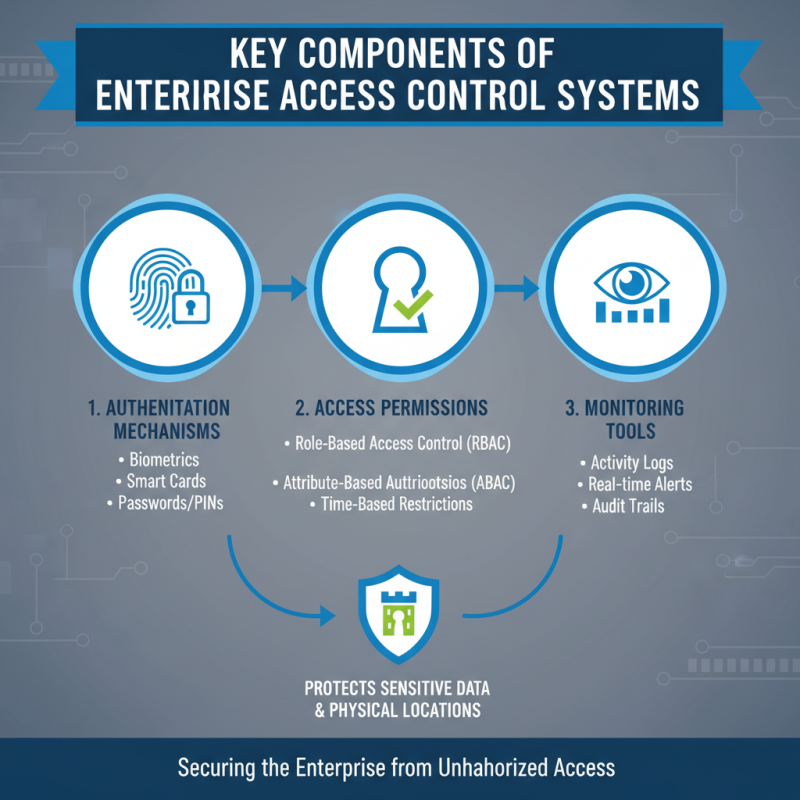
Enterprise access control is essential for managing who can enter specific areas or systems within an organization. Key components of these systems include authentication mechanisms, access permissions, and monitoring tools. These elements work together to protect sensitive data and physical locations from unauthorized access.
Authentication mechanisms verify individual identities through methods such as passwords, biometrics, or tokens. Each method has strengths and weaknesses. For example, password fatigue can lead to poor choices, while biometric solutions may raise privacy concerns. Accurate access permissions are crucial. They ensure employees can access necessary resources while limiting exposure to sensitive information. Balancing ease of access with security is a continual challenge.
Monitoring tools play a vital role. They track access attempts and provide alerts for suspicious activities. While effective, reliance on technology can create potential blind spots. Employees must also feel engaged in the security culture. If they view access control as an obstacle, compliance may suffer. Regular reviews and updates to the system are essential to adapt to evolving threats. This ongoing process demands attention and investment to ensure robust security practices.
How Enterprise Access Control Works in Organizations
Enterprise access control is essential for safeguarding sensitive information in organizations. It outlines who can access specific data and resources. Each employee usually has different access privileges based on their role. The role-based approach allows companies to minimize risks while ensuring efficiency.
In practice, access control begins with defining user roles. Each user is assigned to a group that specifies their level of access. This group dynamic helps manage permissions efficiently. For instance, finance staff may access sensitive financial reports while others do not. Regular audits help ensure that access is appropriate and identify any gaps.
Yet, managing access can pose challenges. Employees tend to switch roles or projects frequently. This can lead to outdated permissions. Organizations should regularly review access rights. Automating these updates can improve security. However, the balancing act remains: maintaining accessibility while preventing unauthorized entry. This ongoing challenge requires vigilance and adaptation.
Benefits of Implementing Enterprise Access Control
Implementing enterprise access control offers several key benefits that enhance security and efficiency. First, it establishes clear permissions for users based on their roles. This ensures that employees access only the information necessary for their job functions. By doing so, companies reduce the risk of data breaches significantly. Employees are less likely to mistakenly expose sensitive information when their access is limited.
Another advantage is streamlined compliance. Many industries face strict regulatory requirements. Access control systems can automate the monitoring of compliance status, making audits simpler. This can alleviate stress on staff who might otherwise manually track access logs. However, organizations must regularly review permissions to avoid outdated access rights that could lead to security gaps.
Implementing a robust access control system also fosters a culture of accountability. Employees know their actions are monitored. This can lead to more responsible behavior regarding data usage. Yet, some employees may feel uneasy about surveillance. It’s important for organizations to balance security and trust, fostering open communication about access policies.
Benefits of Implementing Enterprise Access Control
Common Challenges in Enterprise Access Control Management
Managing enterprise access control is not without challenges. One common issue is the complexity of user roles. Organizations often have numerous roles that evolve over time. This evolution can lead to confusion about who has access to what. Additionally, without clear guidelines, users may inadvertently gain access to sensitive information.
Another challenge lies in the integration of systems. Many enterprises use multiple platforms for different functions. Ensuring seamless integration can be difficult. When systems do not synchronize effectively, it creates gaps in security. Employees may face delays when trying to access necessary tools.
Furthermore, frequent changes in personnel can complicate access management. New hires require timely access, while former employees must have their access removed promptly. Delays in these processes can expose organizations to security risks. Regular reviews can help, but they are often neglected due to resource constraints. Balancing security with operational efficiency is a constant struggle for many enterprises.