Top 10 Back Brake Calipers for Global Buyers?
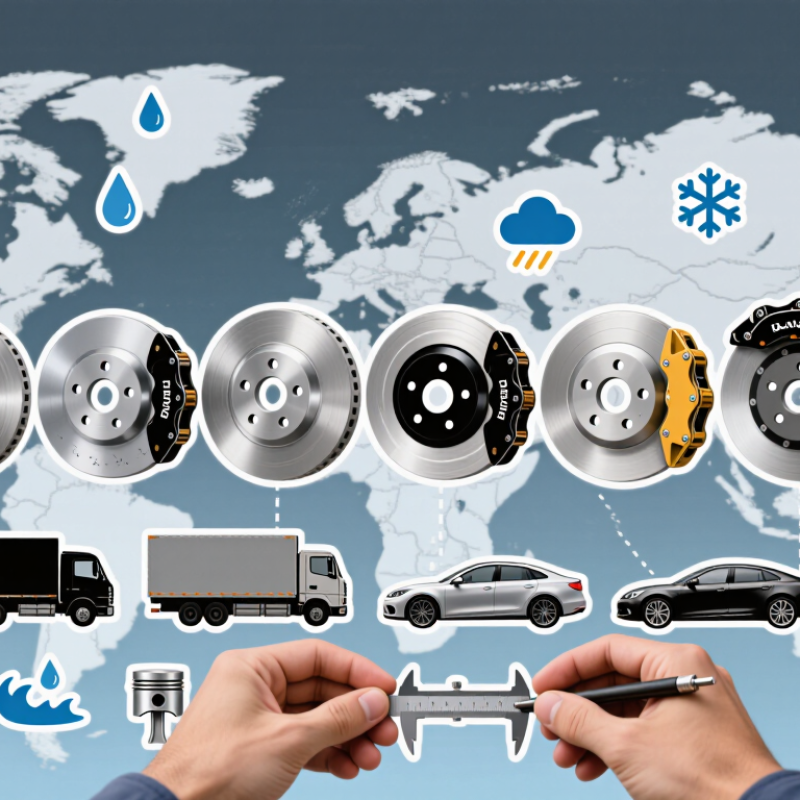
Choosing the right Back Brake Caliper requires more than comparing prices, colors, or advertised piston sizes. Global buyers face different climates, road conditions, vehicle platforms, and supply standards. A caliper that performs well in a dry region may suffer faster corrosion near saltwater roads. Small differences matter.
Rudolf Limpert, a respected brake-system engineer and author, stated, “Brake design must provide safe, predictable performance under all operating conditions.” That principle guides this selection. The Top 10 Back Brake Calipers for Global Buyers should be judged through fitment accuracy, piston movement, seal quality, heat resistance, corrosion protection, and replacement-part availability. Buyers should also verify casting quality, bleeder-screw access, parking-brake compatibility, and manufacturer testing. A polished finish does not prove dependable braking.
Real-world inspection remains valuable. Check whether the piston retracts smoothly. Examine the dust boot for wrinkles or gaps. Confirm that mounting holes align without forced adjustment. Listen for abnormal pad movement after installation. These details can reveal problems before a vehicle reaches a busy highway. Still, no ranking is flawless. Product batches can change, regional specifications may differ, and supplier descriptions can contain mistakes. That deserves attention.
This guide compares leading options for passenger cars, commercial vehicles, performance applications, and demanding weather conditions. It considers technical evidence, user experience, warranty support, and sourcing reliability. The goal is not to praise one brand blindly. It is to help importers, workshops, distributors, and careful vehicle owners make a safer, better-informed decision.
What Are Back Brake Calipers and Why Do They Matter?
Back brake calipers are hydraulic mechanisms that press brake pads against a rotating disc. They sit near the rear wheel hub and convert pedal pressure into controlled friction. Front brakes usually provide more stopping force, but rear calipers still manage stability, weight transfer, and parking-brake functions. A weak rear unit can cause uneven braking, longer stops, or unwanted pulling.
The safety impact is not theoretical. The World Health Organization’s Global Status Report on Road Safety 2023 records approximately 1.19 million road deaths worldwide each year. Brake condition is only one factor, yet reliable braking remains essential. U.S. Federal Motor Vehicle Safety Standard 135 also sets minimum performance requirements for passenger-vehicle braking systems, including stopping control and fade resistance. These rules make caliper quality a technical issue, not merely a replacement-cost decision.
Global buyers should inspect piston sealing, corrosion protection, pad alignment, guide-pin movement, and compatibility with electronic parking brakes. Cast iron can offer strength, while aluminum may reduce unsprung weight. The better choice depends on climate, axle load, road salt, and service access. ISO 9001 certification can support manufacturing consistency, but it does not prove every caliper fits every vehicle. That assumption is easy to make—and costly. I would also verify test records, seal materials, coating thickness, and warranty conditions before comparing the top ten options. Stopping performance deserves evidence, not attractive packaging.
Key Specifications Global Buyers Should Compare
When comparing the top ten brake calipers, global buyers should start with measurable specifications. Piston count matters, but piston diameter controls hydraulic force more directly. A six-piston design may still perform poorly with uneven pad contact. Measure total piston area, caliper stiffness, pad surface, and rotor compatibility. Do not trust appearance alone.
NHTSA’s FMVSS No. 135 criteria use a 100 km/h stop and set a 70-metre maximum stopping distance for applicable passenger vehicles. UNECE Regulation No. 13-H also evaluates braking performance through deceleration, temperature, and repeated-stop procedures. These figures make testing more useful than catalogue claims. Ask suppliers for cold-stop, fade, recovery, and pressure-test results. Temperature ratings should include the seal material, not only the caliper body.
The IEA’s Global EV Outlook 2025 reports more than 17 million electric cars sold worldwide in 2024. Regenerative braking reduces friction-brake use, which can increase rust risk and uneven pad transfer. Buyers should compare piston seals, dust boots, coating thickness, corrosion testing, and replacement-part availability. Weight deserves attention too, especially for electric vehicles. Yet lighter is not automatically better. I would also check mounting accuracy and bleeder position, because small installation errors can create large braking differences. Some supplier data remains incomplete. That deserves caution.
Top 10 Back Brake Calipers for Different Vehicle Needs
Top 10 Back Brake Calipers for Global Buyers?
Top 10 Back Brake Calipers for Different Vehicle Needs
Choosing rear brake calipers starts with the vehicle, not the catalog photograph. Compact cars need lightweight, single-piston calipers for daily traffic. Family sedans benefit from quiet sliding calipers and reliable dust protection. Larger SUVs require stronger bodies and wider pad support. Pickup trucks often need calipers designed for heavier loads and frequent towing. Check the axle rating carefully.
Performance vehicles may need fixed, multi-piston calipers with better heat control. Off-road vehicles require sealed components, strong brackets, and corrosion-resistant finishes. Electric vehicles can use rear calipers with durable electronic parking brake modules. Fleet vans need simple service procedures and readily available seal kits. Classic vehicles may require compact calipers that match older mounting patterns. Racing applications demand specialized cooling and frequent inspection.
Fitment details matter more than piston count. Measure rotor thickness, diameter, offset, and mounting-hole spacing. Confirm pad shape and parking brake compatibility before ordering. The caliper must work with the vehicle’s ABS and brake-bias system. Never assume a similar-looking part will perform safely.
During inspection, look for uneven pad wear, fluid seepage, damaged boots, and seized guide pins. A small scoring mark can reveal a larger alignment problem. My own selection habits are not perfect; I once focused too much on weight and overlooked service access. That mistake made routine maintenance slower.
Reliable buyers compare technical drawings, test data, warranty terms, and local support. Shortcuts are rarely cheap.
Material, Compatibility, Certification, and Performance Factors
For a credible Top 10 back brake calipers list, buyers should inspect material before appearance. Cast iron offers stiffness and cost control. Aluminum reduces unsprung weight, but needs careful corrosion protection. Check piston diameter, mounting spacing, rotor thickness, and parking-brake design. A perfect fit is not optional. The World Health Organization’s Global Status Report on Road Safety 2023 recorded about 1.19 million road deaths annually. That figure makes braking reliability a practical purchasing concern, not a marketing detail.
Compatibility requires more than matching the vehicle year. Confirm axle position, brake fluid type, pad shape, electronic parking-brake requirements, and left-right orientation. For certification, request traceable test records against applicable rules, such as FMVSS 135 or UNECE R13-H, where relevant. IATF 16949 production controls can strengthen confidence, but certification alone does not prove every application works perfectly. SAE J2522-style dynamometer testing can reveal fade, wear, and temperature behavior. Still, one laboratory result may not represent mountain roads, heavy loads, or salt exposure. I would question impressive claims without test conditions.
Tips: Measure the existing caliper and rotor with photographs. Ask for corrosion-test duration, leakage inspection data, and warranty exclusions. Avoid choosing by price alone. A lighter caliper may improve response, yet poor sealing can create expensive trouble. WHO data supports caution, but it does not rank products. Buyers must compare evidence, fitment, and service support together.
How to Choose a Reliable Supplier and Control Import Costs
Choosing among the top 10 back brake calipers requires more than comparing unit prices. I have inspected caliper samples where clean machining hid weak seals and uneven piston movement. Ask suppliers for material specifications, pressure-test records, dimensional drawings, and traceable batch numbers. A reliable supplier should explain piston bore tolerance, coating performance, corrosion testing, and replacement-part availability. Request one sample before placing a large order. Test it under repeated braking conditions, not only on a workbench.
Import costs can change the real price quickly. Calculate the landed cost using the product price, packaging, inland transport, freight, insurance, duties, and local taxes. Confirm the correct customs classification with a qualified broker. Do not rely on a supplier’s informal estimate. Clarify Incoterms, minimum order quantity, payment stages, and delivery responsibility in writing. Strong cartons, moisture protection, and labelled pallets can prevent expensive damage at arrival. A pre-shipment inspection may cost extra, but it can reveal missing fittings or surface defects before loading.
Check supplier history and production capacity. Video calls help, but factory records are stronger evidence. Request references where practical. Be cautious with unusually low quotations. They often exclude testing or after-sales support. My own buying notes are not perfect; freight assumptions can age within days. Recheck them before approval. Reliability is built through documented controls, realistic lead times, and honest communication.