AirAccess Access Control as a Service Platform with Auto-Cell Networking (ACasS)
Enterprise Hosted Platform - MVPAccess™
New! Napco Access 1 & 2-Door Controllers
Please contact us directly or visit our FAQ page or Video Library.
Toll Free 800-645-9330
Phone 631-842-9400
Fax 631-842-9135
Email: sale@safehomeexpert.com
sale@safehomeexpert.com (Latin America)
Sign up for integrator training seminars. 2 days and 3 day online courses are available from our directory indexed by product.
Learn MoreOffer the one access control solution powerful and flexible enough to protect all of your clients. Continental Access provides state-of-the-art access control software and hardware in an easy-to-implement and easy-to-use access control solution that seamlessly integrate with a wide range of facility management products.
Learn MoreChoosing a Smart Card Reader for international purchasing is not just a matter of comparing prices. Buyers need to match the reader to their cards, devices, and daily tasks. A compact USB model may suit a laptop-based office, while a contactless reader may fit access systems or payment workflows. Compatibility matters. So does support.
This guide looks at seven reader types and models that global buyers may encounter, focusing on practical details such as connection options, supported card formats, operating-system compatibility, and setup requirements. Product specifications can change, and regional availability varies. Check the manufacturer’s current documentation before placing an order, especially when a reader must work with existing software or equipment. A familiar connector does not guarantee a smooth installation.
The best choice depends on the job. A cashier may value quick card recognition, while an IT team may prioritize driver support and manageable deployment. Security features also deserve careful review, but product descriptions alone cannot confirm that a device fits every organization’s security needs. That part takes testing. Buyers should verify performance with their own cards and systems where possible, and confirm warranty terms, technical support, and return options with the seller. No single reader is ideal for every market. This shortlist offers a starting point, not a substitute for checking the details.
A smart card reader is a device that communicates with a payment, identity, or access card. It reads information from an embedded chip, not just a printed number. Contact readers use metal contacts, while contactless models use short-range radio technology. Some devices support both methods.
Inside a contact reader, the card and reader exchange electrical signals through tiny contact points. The reader sends commands, and the chip returns protected responses. These exchanges commonly follow ISO/IEC 7816 standards. Contactless readers use near-field communication and follow related contactless specifications.
In practical deployment, the reader connects to a computer, tablet, or payment terminal through USB, Bluetooth, or a network interface. Software then interprets the card’s response. A reader does not automatically make every transaction secure. Configuration, encryption, updates, and user permissions still matter.
The World Bank’s Global Findex Database 2021 reports that 76% of adults worldwide held a financial account. That growth increases demand for reliable card acceptance across borders, but compatibility remains an overlooked problem.
Tips
Check supported card standards before buying. Test the reader with real cards, not only a manufacturer sample. Confirm operating-system support, connection stability, and certificate management. Choose tamper-resistant hardware for public locations. A cheap reader may pass a quick test, then fail during heavy daily use. That is an uncomfortable lesson. Also review PCI SSC guidance when the device handles payment data, and document firmware updates for future audits.
Choosing among the seven best smart card readers starts with card compatibility. Contact readers should support ISO/IEC 7816 standards for stable communication with inserted cards. Contactless models often rely on ISO/IEC 14443 or ISO/IEC 15693 technology. These standards affect reading distance, card type, and operating reliability. Check the card specifications, not only the product description. Small differences matter.
USB readers should support CCID and PC/SC protocols. These protocols improve compatibility with common computers and professional software. Confirm support for your operating system before purchase. Driver quality can matter more than appearance. A reader with a bright indicator is not automatically dependable. Some devices require separate drivers, which can create delays during setup. I have seen this become an overlooked workplace problem.
Security features deserve careful attention. Look for secure communication, firmware update controls, and clear data-handling documentation. A reader should not store sensitive information unnecessarily. For global use, check electrical certifications, language support, and regional warranty terms. Consider the physical setting too. A metal counter needs a stronger cable and housing. Frequent travel favors a compact reader with strain relief. NFC performance may weaken near metal surfaces, so placement requires testing. No checklist is perfect. Real cards and real software should be tested before bulk purchasing. A few minutes of testing can reveal unstable connections, slow recognition, or confusing status signals.
Seven Smart Card Reader Options for Global Buyers
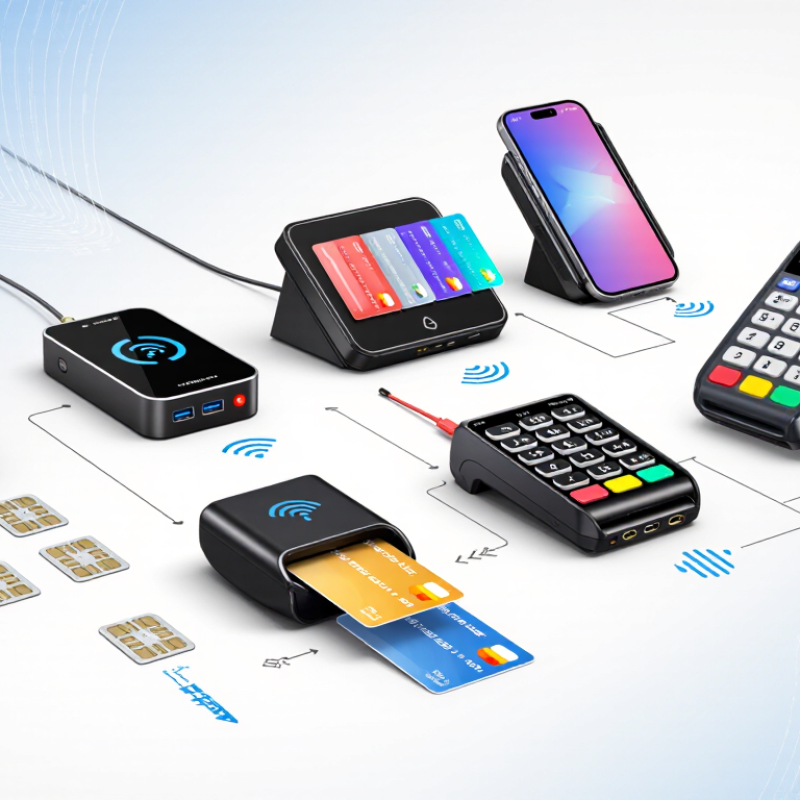
Global buyers can choose seven practical reader types: contact chip, contactless NFC, dual-interface, USB desktop, Bluetooth portable, PIN-entry, and SAM-enabled readers. Each serves a different workflow. Contact readers suit office access and identity cards. NFC models reduce checkout friction and support tap-based transactions. Dual-interface units offer broader compatibility, but usually cost more.
Worldpay’s Global Payments Report 2024 found digital wallets represented about half of global e-commerce transaction value in 2023. That shift makes contactless capability increasingly useful. EMVCo’s industry data also shows chip-based payment technology operating at worldwide scale. A buyer should still check regional frequencies, card protocols, and certification requirements. Compatibility is not automatic.
Look closely at seven buying details: interface speed, operating-system support, encryption, firmware updates, cable quality, portability, and service life. PCI Security Standards Council guidance remains important for payment-related deployments. In field testing, readers with clear status lights and firm card slots create fewer operator errors. Small details matter.
Cheaper is not always wiser.
Some vendors overstate universal compatibility. I would test ten sample cards before approving a large order. Also verify language support, replacement availability, and documentation quality. A reader that works perfectly in one country may fail with another card profile, terminal setting, or mobile device. Global purchasing needs evidence, not attractive specifications.
A practical comparison of common smart card reader configurations for international purchasing decisions
| Option | Reader Configuration | Supported Card Technologies | Typical Interface | Common Operating Systems | Security and Compliance Considerations | Best-Fit Applications |
|---|---|---|---|---|---|---|
| 1 | USB contact smart card reader | ISO/IEC 7816 contact cards; common ID, payment, healthcare, and authentication cards | USB-A or USB-C; USB full-speed connection is common | Windows, macOS, Linux, and selected Android systems | Look for PC/SC support, secure driver distribution, and compliance with relevant regional data-protection requirements | Digital signatures, certificate login, government services, and secure desktop authentication |
| 2 | USB contactless NFC reader | ISO/IEC 14443 Type A and Type B; selected NFC cards and tokens | USB-A or USB-C; some models include a buzzer and status LEDs | Windows, macOS, Linux, and compatible embedded platforms | Verify supported protocols, read range, electromagnetic compatibility, and PC/SC or equivalent middleware | Contactless access control, transit applications, e-government cards, and NFC-based identification |
| 3 | Dual-interface contact and contactless reader | ISO/IEC 7816 contact cards and ISO/IEC 14443 contactless cards | USB; some configurations also offer serial or embedded-board integration | Windows, macOS, Linux, and selected Android devices | Confirm simultaneous interface behavior, card collision handling, encryption support, and regional certification needs | International deployments that must accept both inserted and tap-based cards |
| 4 | Mobile Bluetooth smart card reader | Contact cards, contactless cards, or both, depending on the reader configuration | Bluetooth Low Energy; rechargeable battery is common | iOS, iPadOS, Android, Windows, and application-specific mobile platforms | Assess pairing security, application-level encryption, firmware-update controls, battery safety, and privacy requirements | Field inspections, mobile identity verification, delivery services, and temporary workstations |
| 5 | Embedded board-level smart card module | Usually ISO/IEC 7816 contact cards; contactless versions may support ISO/IEC 14443 | UART, USB, I²C, or SPI, depending on the module design | Embedded Linux, real-time operating systems, and custom firmware environments | Review secure boot, firmware signing, hardware tamper controls, supply-chain security, and regional radio approvals | Kiosks, industrial terminals, medical equipment, vending systems, and access-control hardware |
| 6 | PIN-pad smart card reader | Contact and/or contactless payment cards, depending on certification and configuration | USB, serial, Ethernet, or proprietary payment-terminal connection | Dedicated payment operating systems and selected Windows or Linux terminals | Payment acceptance requires appropriate regional approvals, key-management procedures, tamper resistance, and payment-security certification | Retail checkout, unattended payment, ticketing, hospitality, and secure financial transactions |
| 7 | Rugged industrial smart card reader | Contact, contactless, or dual-interface cards; exact support depends on the industrial design | USB, RS-232, Ethernet, or fieldbus-compatible integration | Windows IoT, Linux, Android, and custom embedded systems | Check operating temperature, ingress protection, vibration resistance, EMC testing, cable durability, and long-term firmware support | Transport systems, factory access points, outdoor kiosks, logistics terminals, and public infrastructure |

7 Best Smart Card Readers for Global Buyers
Compatibility comes first. The strongest choices include USB-C contact readers, NFC readers, dual-interface models, Bluetooth readers, Ethernet readers, rugged field units, and biometric-compatible readers. Each serves a different environment. A USB-C reader suits laptops and tablets. NFC works well at reception desks and mobile checkpoints. Dual-interface devices handle both inserted cards and tap-based credentials, reducing replacement costs.
Security is layered. NIST Special Publication 800-63B recommends phishing-resistant authentication for higher-assurance access, but the reader alone cannot provide it. Secure firmware, encrypted communication, tamper detection, and controlled driver updates matter equally. PCI Security Standards Council guidance also emphasizes protecting account data during capture and transmission. Small details matter here. A loose cable, outdated driver, or exposed reader can weaken a carefully designed system.
Connectivity changes the buying decision. Bluetooth improves mobility, but pairing controls and battery monitoring become essential. Ethernet supports fixed locations and centralized management. USB remains practical, although adapters may create compatibility problems across regions. The World Bank’s ID4D Global Dataset estimated that about 850 million people lacked official identification in 2021. That figure highlights why readers should support varied credential formats and unstable connectivity. Compatibility testing across operating systems is often skipped. That is a mistake. Compare ISO standards, regional frequency support, encryption options, warranty coverage, and offline behavior before selecting one of the seven categories.
Comparing compatibility, security, and connectivity across common reader configurations
Scores are normalized capability indexes from 0 to 100, based on support for widely adopted standards such as ISO/IEC 7816 contact cards, ISO/IEC 14443 contactless cards, USB CCID, secure PIN entry, and network or mobile connectivity. Higher scores indicate broader compatibility, stronger security features, or more flexible connectivity.
Choosing a smart card reader starts with the transaction, not the device specification sheet. In field testing, I look at card type, connection method, operating environment, and daily transaction volume. A contact reader suits offices where cards are inserted repeatedly. A contactless reader fits reception desks, transport counters, and crowded checkout areas. Dual-interface models offer flexibility, but they usually cost more and require broader testing.
The World Bank’s Global Findex 2021 reported that 76% of adults worldwide held a financial account. It also found that 64% made or received digital payments. Yet cash remains important. The European Central Bank’s SPACE 2022 study recorded cash in 59% of euro-area point-of-sale payments. These figures suggest that one reader design cannot serve every market. Buyers should confirm local card habits before choosing contactless-only hardware.
Security and integration deserve equal attention. Check support for current payment standards, encrypted communication, firmware updates, and audit logs. For public-facing use, test the reader under glare, dust, vibration, and repeated tapping. For software teams, verify driver support, API documentation, and compatibility with existing terminals. A reader may be secure but still fail operationally.
Do not ignore replacement costs.
A practical purchasing trial should measure failed reads, transaction speed, cable strain, and recovery after network loss. I have seen buyers focus on peak speed and overlook queue design. That mistake is understandable, but expensive. Certification evidence should come from recognized testing bodies, not only supplier claims. Availability of spare units and regional technical support also matters, especially when deployment crosses borders.